Are Tournaments, Gradings, and Seminars Automatically Covered?
What Martial Arts School Owners Must Confirm Before Hosting an Event
This question usually comes up after an event has already been scheduled.
“We’ve got insurance — so this is covered, right?”
It’s an understandable assumption.
But when it comes to tournaments, gradings, and seminars, assumptions are where exposure begins.
Events change the risk profile of a martial arts school — even if they happen in the same venue you train in every day.
So let’s answer the question properly:
Are tournaments, gradings, and seminars automatically covered?
The honest answer is: sometimes — but never by default.
Why Events Are Treated Differently
Regular classes follow predictable structures:
- Known instructors
- Known students
- Established supervision ratios
- Familiar training methods
Events disrupt that pattern.
During events, you often have:
- Higher participant numbers
- Visiting students
- Guest instructors
- Increased intensity
- Spectators
- Modified training formats
From an insurance perspective, this is a material change.
More people.
More variables.
More exposure.
That doesn’t mean events are uninsurable — it means they must be declared correctly.
Tournaments: Competition Changes Everything
Tournaments introduce competitive intensity.
Even well-run events carry higher injury potential due to:
- Adrenaline
- Time pressure
- Fatigue
- Mismatched skill levels
- Refereeing judgment calls
Insurers will often assess:
- Rule sets
- Protective equipment
- Referee qualifications
- Age divisions
- Medical presence
- Incident response planning
If your policy only contemplates “instruction and training,” a competitive tournament may sit outside scope unless disclosed.
The issue isn’t whether tournaments are allowed.
The issue is whether they are declared.
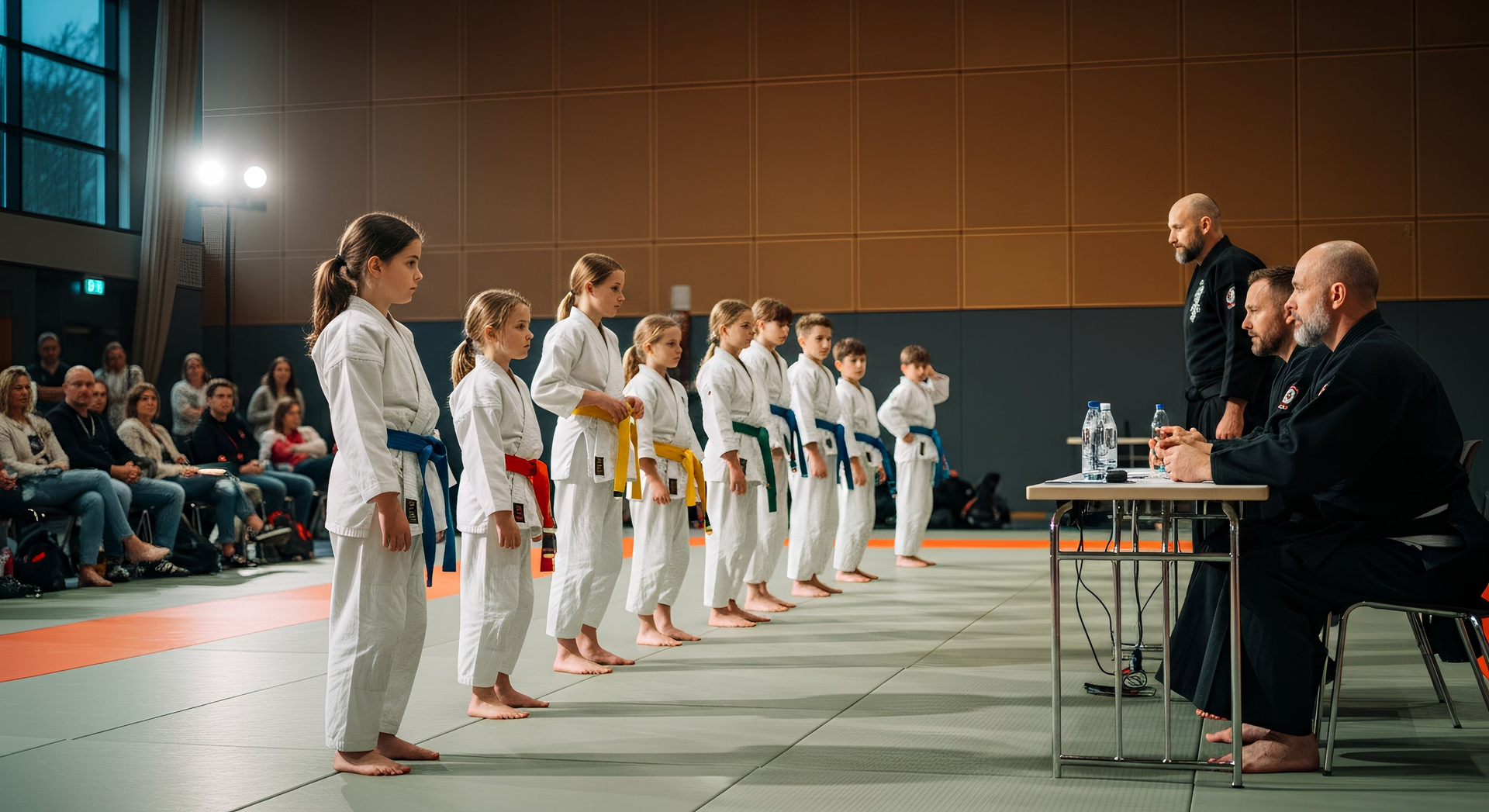
Gradings: Familiar but Still Different
Gradings feel routine.
They’re part of martial arts culture.
But from an insurance perspective, gradings are still events.
They often involve:
- Extended training duration
- Higher physical and mental stress
- Multiple assessors
- Visiting examiners
- Younger or less experienced students pushing limits
Injury risk increases when students attempt techniques under pressure.
If a grading is conducted by visiting instructors or across multiple affiliated schools, disclosure becomes even more important.
Insurance does not assume gradings automatically.
It responds to what is stated in the policy.
Seminars and Guest Instructors
Seminars are one of the most common grey areas.
A guest instructor may:
- Teach unfamiliar techniques
- Introduce new training progressions
- Work with students they’ve never met
- Teach at higher intensity
From a liability standpoint, questions arise quickly:
Who is responsible for instruction?
Is the guest instructor insured independently?
Is the event covered under the host school’s policy?
If a claim arises, insurers will examine:
- Who was delivering instruction
- Whether they were declared
- Whether the activity fell within policy definitions
If these details are unclear, defence becomes more complex.
Spectators and Non-Members
Events often bring non-members into the venue.
Parents, friends, supporters.
These individuals are not covered by membership agreements or waivers in the same way as students.
If a spectator slips, is struck by equipment, or is injured during an event, public liability exposure arises.
Your policy must contemplate:
- Increased foot traffic
- Seating arrangements
- Crowd control
- Emergency exits
This is particularly important for off-site venues.
On-Site vs Off-Site Events
Holding an event in your own dojo is not the same as holding it elsewhere.
Off-site events introduce:
- Venue hire agreements
- Shared liability
- Venue insurance requirements
- Indemnity clauses
Some venues require evidence of insurance specifically noting event activity.
Others require higher liability limits.
Assuming your standard policy automatically satisfies venue requirements can cause last-minute issues — or worse, uncovered exposure.
Who Is the “Event Organiser”?
Insurance responds based on responsibility.
If your school is the organiser:
- You may be responsible for overall safety
- You may be responsible for instruction coordination
- You may be responsible for crowd management
If you are participating but not organising, your exposure may differ.
Clarifying your role is essential.
Insurance follows responsibility, not presence.
Why Notification Matters — Even If You Run Events Regularly
Some owners say:
“We do this every year.”
That’s fine — but consistency does not equal automatic coverage.
If your insurer was never informed, repetition doesn’t correct the gap.
Insurers assess based on disclosure at policy inception and renewal.
Events should be disclosed:
- At policy setup
- At renewal
- Or when new event types are introduced
Notification allows endorsement or confirmation of cover.
Silence creates uncertainty.
The Cost of Assuming Coverage
If an incident occurs at an undeclared event, insurers may question:
- Whether the activity was insured
- Whether the risk profile changed
- Whether the policy responds
This does not automatically mean a claim is denied — but it introduces complexity.
Complexity delays resolution.
Delays increase stress.
Stress affects reputation and finances.
All of this is avoidable through upfront disclosure.
Best Practice for Event Protection
Strong schools approach events deliberately.
That includes:
- Written event plans
- Clear instructor roles
- Verification of guest instructor insurance
- Appropriate supervision ratios
- Incident reporting procedures
- Advance notification to insurers
When events are structured professionally, insurance functions smoothly.
Final Perspective
Tournaments, gradings, and seminars are vital to martial arts culture.
They build community, progression, and credibility.
But they are not “business as usual” from an insurance perspective.
They are heightened exposure moments.
The question is not whether they can be covered.
The question is whether they have been declared, structured, and understood.
Specialist insurance aligned with martial arts operations ensures your events strengthen your school — not strain it.