Shaolin Kung Fu
History, Discipline, and the Living Tradition of a 1,500-Year Legacy
Where It All Began
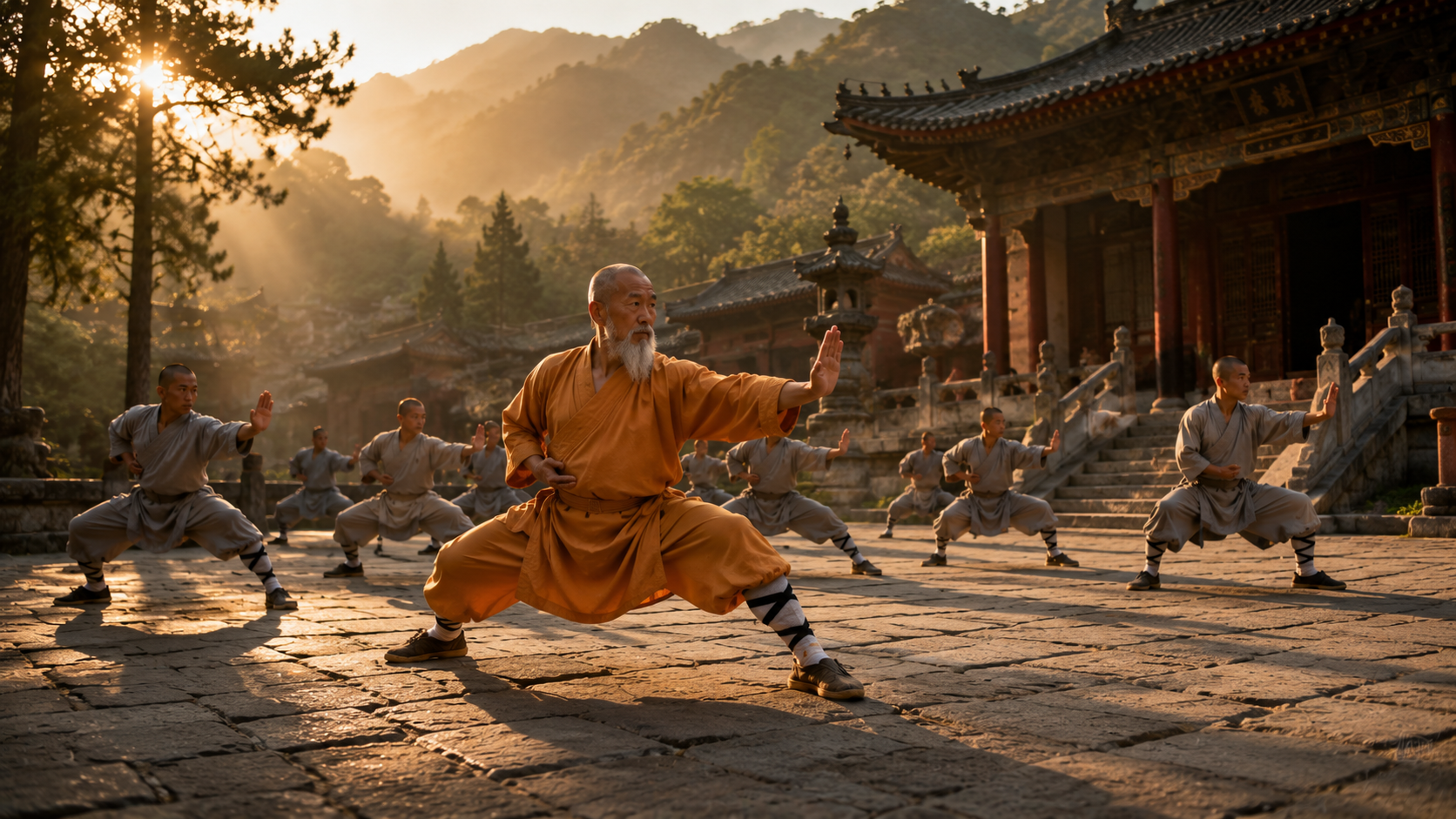
Few martial arts carry the weight of history that Shaolin Kung Fu does. Originating at the Shaolin Monastery in Henan Province, China — a Buddhist temple founded around 495 CE — Shaolin Kung Fu is not simply a fighting system. It is one of the oldest continuously practised martial traditions in human history, and the source from which countless other Chinese martial arts have drawn their roots.
The story most commonly told begins with the Indian monk Bodhidharma, known in China as Da Mo, who is said to have arrived at the Shaolin Monastery in the early 6th century. Finding the monks physically weakened from long hours of seated meditation, Da Mo is credited with introducing a series of exercises designed to strengthen the body and cultivate internal energy — the precursor to what would become Shaolin Kung Fu. While historians continue to debate the precise details of this origin story, what is beyond dispute is that the Shaolin Monastery became the most influential centre of martial arts development in Chinese history.
Over the following centuries, Shaolin monks refined and expanded their fighting methods, incorporating elements of animal movement, Buddhist philosophy, and both external strength training and internal energy cultivation. The result was a comprehensive system covering striking, grappling, weapons, and a philosophy of discipline that linked physical practice to spiritual development.
The Core Principles of Shaolin Training
What distinguishes Shaolin Kung Fu from a purely technical fighting system is its integration of physical, mental, and spiritual development as a unified whole. At Martial Arts Australia, we often describe traditional martial arts as character development that happens to involve combat skills — and nowhere is this more evident than in the Shaolin tradition.
Shaolin training is built on several foundational principles:
Discipline and Consistency
Progress in Shaolin Kung Fu is never rushed. The system demands patient, repetitive practice, instilling the habit of showing up and doing the work regardless of immediate results.
Internal and External Harmony
Shaolin training develops both the external body (strength, speed, flexibility, coordination) and the internal systems (breathing, energy flow, mental focus). This dual development is what gives advanced practitioners a quality of movement and power that goes beyond simple athleticism.
The Five Animal Styles
One of the most recognisable elements of Shaolin Kung Fu is the five animal system:
- Tiger
- Crane
- Leopard
- Snake
- Dragon
Each animal archetype represents different qualities of movement and character.
- Tiger training builds power and aggression.
- Crane develops balance and precision.
- Leopard cultivates speed.
- Snake trains flexibility and sensitivity.
- Dragon develops spirit, coordination, and the ability to generate force from the whole body.
Weapons Training
Traditional Shaolin practitioners train extensively with weapons, including:
- Staff (gun)
- Broadsword (dao)
- Straight sword (jian)
- Spear
Weapons training develops attributes — reach awareness, two-handed coordination, and precision — that directly enhance empty-hand practice.
What Shaolin Training Looks Like Today
Modern Shaolin Kung Fu training spans a wide range, from traditionalist schools that preserve classical forms and temple methodologies to contemporary schools that blend Shaolin principles with modern athletic training methods.
What remains consistent across serious schools is the foundation of forms practice — sequences of techniques performed solo that encode the principles of the system — combined with partner training, conditioning work, and application study.
A typical beginner in a Shaolin school will spend the first months developing basic stances, footwork, and striking techniques, as well as beginning conditioning for flexibility and physical strength.
Progression involves:
- Learning increasingly complex forms
- Developing partner application practice
- Deepening the internal dimension of training
Many schools include qigong — structured breathing and energy exercises — as a complement to the more physically demanding external practice.
One of the things we consistently hear from Shaolin practitioners in the MAA community is that the training changes more than just their physical capacity. The discipline required, the patience cultivated, and the philosophical framework that underpins the practice produce changes in character that carry over into every other area of life.
Shaolin Kung Fu in Australia
Australia has a rich and long-established Shaolin Kung Fu community. Schools operating in major cities and regional centres teach both the traditional temple system and various lineage branches that have developed over centuries of transmission.
Many Australian Shaolin instructors maintain direct lineage connections to mainland Chinese masters, while others have developed their own authentic expressions of the art informed by decades of dedicated practice.
For prospective students, finding the right school matters.
The quality of instruction in any traditional martial art varies considerably, and Shaolin Kung Fu is no exception. Look for instructors who:
- Can clearly articulate their lineage and training background
- Emphasise foundational work before advanced material
- Demonstrate in their own practice the qualities they are attempting to teach
Who Shaolin Kung Fu Is For
Shaolin Kung Fu is genuinely suitable for a wide range of students.
Children
Children benefit enormously from the discipline, focus, and physical development the training provides.
Adults
Adults — including those starting later in life — can engage meaningfully with the system, as the emphasis on internal development becomes increasingly accessible with maturity.
Athletes
Athletes from other disciplines often find that Shaolin training develops attributes their primary sport cannot, particularly coordination, flexibility, and a quality of relaxed power.
That said, it is worth being honest: traditional Shaolin Kung Fu is demanding. It asks for patience, consistency, and a willingness to embrace long-term development over short-term gains.
Students who approach it looking for a quick self-defence fix or an easy fitness routine are likely to be disappointed. Students who approach it with genuine curiosity and a readiness to be changed by the process tend to find it one of the most rewarding pursuits of their lives.
The LivingTradition
What makes Shaolin Kung Fu remarkable is not simply its antiquity — it is the fact that it remains a living, evolving tradition.
Today, both the original Shaolin Monastery in Henan and its many diaspora branches continue to train practitioners, research historical materials, and refine their understanding of the system. The martial arts world is richer for it.
At Martial Arts Australia, we are proud to support the many Shaolin Kung Fu instructors and schools across the country who are carrying this tradition forward with integrity and commitment.