Martial Arts for Mental Health: What the Research Actually Says
Anxiety, Stress, Confidence, and the Science Behind the Dojo's Hidden Benefits
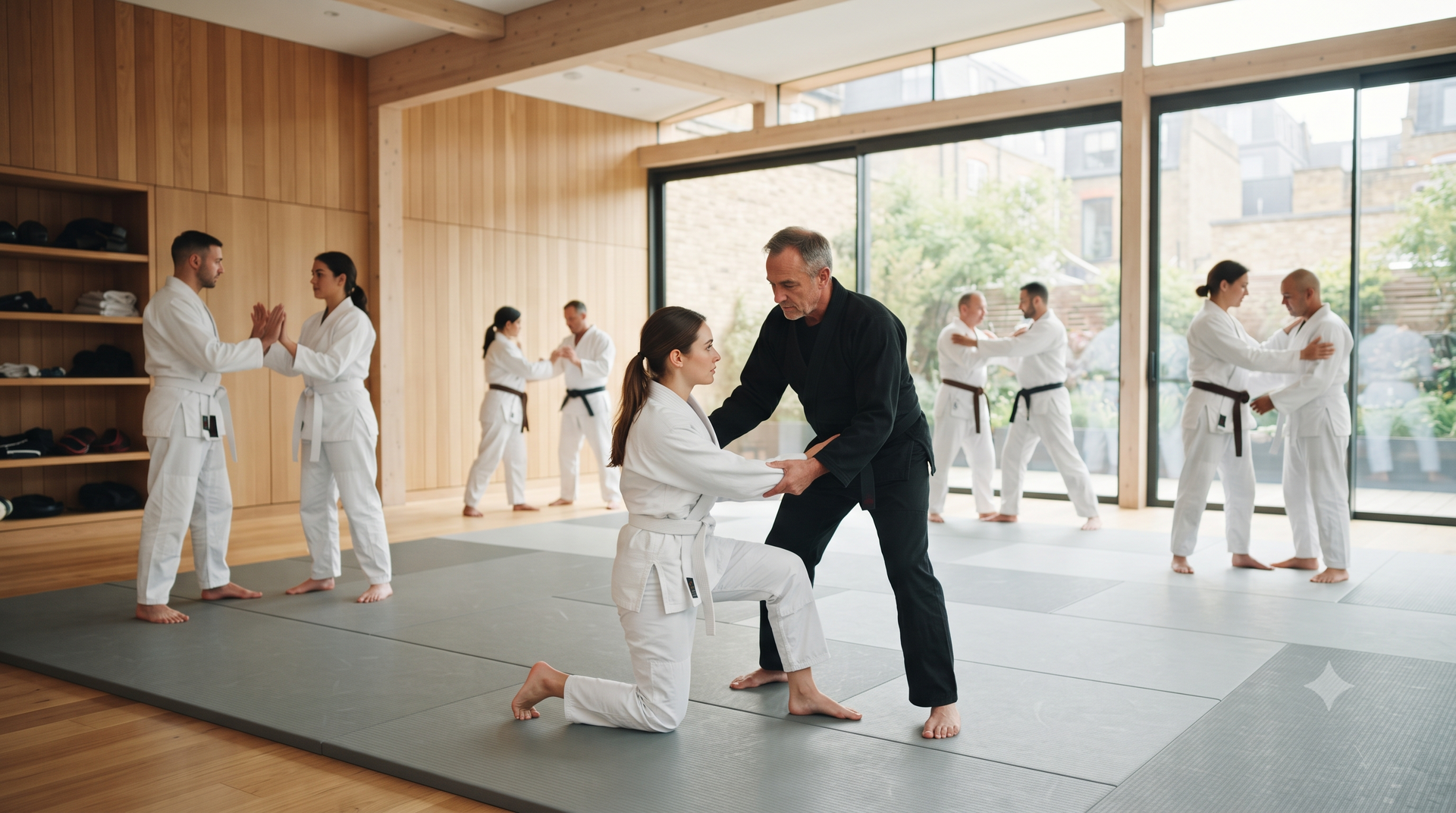
Ask any long-term martial arts practitioner what the art has done for their mental state and you will hear remarkably consistent answers. Calmer. More focused. Better at handling pressure. Less reactive. Harder to rattle. These are not the answers you would expect from someone whose hobby involves being punched or thrown, yet they are near-universal.
For years, this was largely anecdotal — the collective testimony of people who had experienced something they struggled to fully articulate. That is changing. A growing body of peer-reviewed research is now examining what happens psychologically when people train consistently in martial arts, and the findings are substantial. This article takes a serious look at what the science actually says — not the promotional claims, but the research.
Anxiety Reduction: The Controlled Stress Response
Several peer-reviewed studies have examined the relationship between martial arts training and anxiety levels. A consistent finding across these studies is that regular martial arts practice is associated with significant reductions in both trait anxiety (a general tendency toward anxiety as a personality characteristic) and state anxiety (anxiety experienced in response to specific situations).
The mechanism appears to be related to what researchers call 'stress inoculation.' Martial arts training — particularly sparring or randori — regularly exposes practitioners to controlled, manageable doses of physical and psychological stress. The body responds to this stress with the standard physiological cascade: elevated heart rate, adrenaline release, heightened alertness. But because the environment is controlled and the practitioner has increasing experience managing it, the nervous system gradually calibrates its threat response. Put simply, the practitioner becomes harder to frighten because they have been in frightening situations and come through them.
This is not merely theoretical. Research published in peer-reviewed sports science journals has shown measurable reductions in cortisol levels — the primary stress hormone — in regular martial arts practitioners compared to sedentary controls. The parasympathetic nervous system, responsible for the 'rest and digest' state of calm, becomes more efficiently activated following training sessions.
Depression and the Moving Meditation Effect
The relationship between physical exercise and depression is well-established in clinical research. Regular aerobic exercise produces meaningful reductions in depressive symptoms — comparable in some studies to the effects of antidepressant medication for mild to moderate depression. Martial arts, as a vigorous physical activity, inherits these benefits.
But martial arts appears to offer something beyond general exercise. The focused, technique-based nature of training creates what many researchers describe as a 'moving meditation' effect. When a practitioner is drilling a kata, working a combination, or rolling with a training partner, the demands of the activity consume the conscious mind's attention entirely. There is no mental space for rumination — the repetitive, negative thought patterns that are a defining feature of depressive episodes — because every available unit of cognitive bandwidth is occupied with what the body is doing.
This is reinforced by the social dimension. Loneliness and social isolation are significant risk factors for depression, and the dojo — across virtually every martial arts culture — creates genuine community. Training partners become friends. The shared experience of difficulty, physical vulnerability, and gradual achievement produces social bonds that many practitioners describe as among the closest of their lives.
Confidence: Earned, Not Given
The confidence that martial arts builds is qualitatively different from the confidence that comes from verbal affirmation or positive self-talk. It is physical evidence-based confidence — the kind that emerges when you have actually done something difficult and know it. You have taken a fall and gotten back up, repeatedly. You have sparred with someone more skilled and survived the discomfort. You have pushed past fatigue to complete a training session.
Research in developmental psychology distinguishes between self-esteem (a general positive regard for oneself) and self-efficacy (the belief that you are capable of accomplishing specific tasks). Martial arts training appears to build self-efficacy in a particularly robust way because the evidence for it is embodied and undeniable. A black belt does not just believe they have improved — they have physical proof in the form of skills that demonstrably did not exist five years earlier.
Studies involving children and adolescents show particularly strong effects. Young people who train in martial arts show measurable improvements in self-reported confidence, reduced rates of bullying victimisation, and improved academic performance — likely because the discipline and focus developed in the dojo transfers to the classroom. For young people navigating the social complexity of school, the dojo provides a structured environment where they can build genuine capability and social standing through honest effort.
ADHD and Attention: An Unlikely Fit
One of the more surprising findings in martial arts mental health research concerns children and adults with Attention Deficit Hyperactivity Disorder (ADHD). Conventional wisdom might suggest that the structured attention demands of martial arts training would be particularly difficult for people with ADHD. The research suggests something quite different.
Multiple studies have found that martial arts training is associated with significant improvements in attention, impulse control, and classroom behaviour in children with ADHD diagnoses. A frequently cited study from 2004, published in the Journal of Attention Disorders, found that Tai Chi practice three times weekly produced greater improvements in ADHD symptoms — including anxiety, daydreaming, inappropriate emotion, and hyperactivity — than control conditions.
The proposed mechanism is the high sensory engagement of martial arts training. Unlike sitting at a desk, which asks an ADHD brain to sustain attention in a low-stimulation environment, martial arts training provides constant physical feedback, social interaction, movement variety, and immediate response to actions. The ADHD nervous system, which struggles with under-stimulation, finds the training environment naturally engaging. What other contexts experience as a deficit — the need for high stimulation — becomes an asset on the mat.
Trauma and the Body: A More Complex Picture
The relationship between martial arts and trauma is nuanced and deserves careful treatment. On one hand, there is promising evidence that certain forms of martial arts training — particularly those emphasising body awareness, breath control, and gradual progression — can support trauma recovery. The embodied, present-moment nature of martial arts training aligns with therapeutic approaches like Somatic Experiencing that work through the body rather than purely through narrative.
On the other hand, sparring and physical contact that is not carefully managed can be retraumatising for individuals with certain trauma histories, particularly those involving physical assault. Quality martial arts instruction is sensitive to this. Responsible instructors create environments where students have genuine control over the intensity of their training, where 'tap' or 'stop' is an inviolable contract, and where the pace of progression respects individual comfort levels.
For anyone considering martial arts as part of a broader mental health recovery journey, the recommendation is to communicate openly with prospective instructors about relevant history, to prioritise schools with professional, trauma-informed teaching approaches, and to progress at a pace that feels consistently safe.
The Whole-Person Approach
What the research increasingly confirms is what experienced practitioners have always intuited: martial arts training is not just exercise with punching. It is a holistic development system that simultaneously challenges and builds the body, the mind, and — in the best schools — the character. The combination of physical demand, technical learning, community connection, and philosophical framework creates conditions for psychological growth that few other activities can replicate.