Muay Thai vs Kickboxing: How the Technical Differences Affect Your School's Insurance Declaration
Eight Limbs, Four Limbs, Clinch Work and Contact Levels Getting Your Striking School's Policy Right
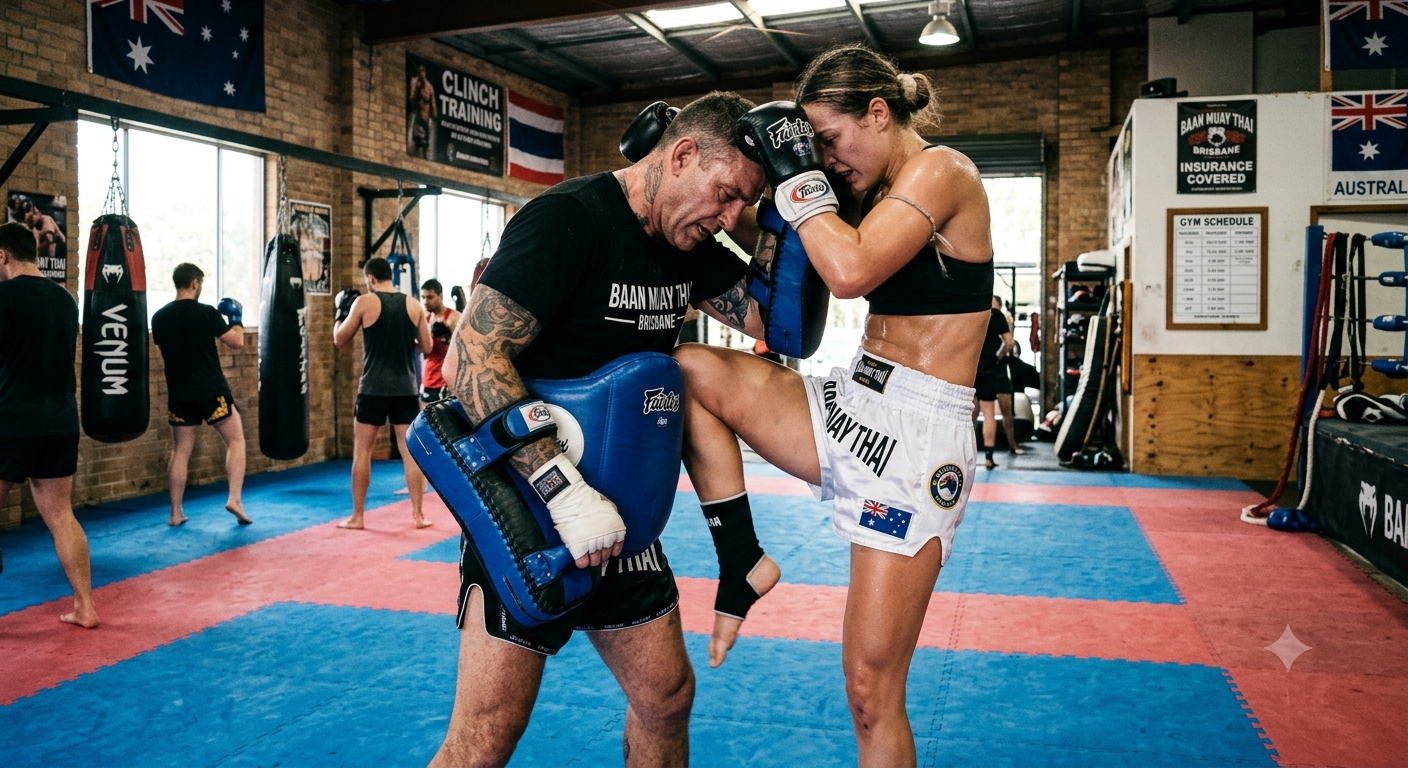
Walk into almost any martial arts gym in a major Australian city and you will find classes for both Muay Thai and Kickboxing. Often offered on the same weekly schedule, by the same coaches, using the same equipment. From the outside they look almost identical — two people in gloves and shorts working a heavy bag or exchanging in a ring. Beneath that surface, however, are two genuinely distinct striking systems. Those distinctions matter for training quality. They also matter specifically for how your school's insurance is structured.
Eight Limbs — and Why Each One Matters to Your Declaration
Muay Thai's 'eight limbs' designation — two fists, two elbows, two knees, two shins — is not merely descriptive. It is a complete technical inventory that has direct insurance implications. The elbows and knees of Muay Thai are not decorative additions to a kickboxing game. They are close-range weapons that produce different injury patterns to the punches and kicks that Kickboxing systems centre on.
Elbow strikes, in particular, carry a specific injury profile: lacerations, eye socket injuries, and the kind of facial damage that produces large medical bills and significant claims. If your school teaches elbows — including in padwork, sparring, and technical drilling — this needs to be specifically declared. A policy declared around 'kickboxing' or 'striking arts' that does not specify elbows and clinch knees may not respond clearly to an elbow-related incident.
The Clinch: Where Muay Thai Becomes Distinct
The Muay Thai clinch — the 'plum' or double collar tie — is a close-range control position from which Thai fighters deliver short knees to the body and head and elbows in close. It is a defining element of serious Muay Thai training that has no equivalent in standard Kickboxing systems. Training the clinch involves deliberate close-range physical control between practitioners in ways that differ from both striking exchange and grappling.
If your school trains the clinch actively — in sparring, in drilling, and in competition preparation — this should be specifically declared as part of your Muay Thai program. Clinch work blurs the line between striking and grappling in ways that an insurer needs to understand to accurately assess your risk profile.
Contact Levels in Sparring: The Most Critical Declaration
The most important single factor in insuring a striking school is the contact level of sparring. Light technical sparring produces a fundamentally different claims profile to full-contact competitive preparation sparring. Some policies cover light or controlled contact as part of normal class activities but specifically exclude full-contact sparring or treat it as a separate category requiring specific disclosure.
If your school runs sparring at any contact level — from controlled technical work to full-contact preparation — the specific contact level needs to be clearly declared. 'We do some sparring' is not a sufficient description. The contact level, the supervision ratios, the protective equipment requirements, and the experience threshold for participation are all relevant details.
Fight Nights and Amateur Bouts
If your Muay Thai or Kickboxing school hosts fight nights or amateur competition events, this generally requires Event Cover arranged separately from your school's ongoing policy. A fight show is a different event to your Wednesday evening class — different attendance, different activity intensity, external participants, and in most cases a different venue. The insurance arrangements need to reflect this difference explicitly.
Do not assume your school policy covers a fight night you host. The question needs to be specifically asked, and the answer needs to be confirmed in writing before the event is announced.
Shin Conditioning and Training Tools
Serious Muay Thai training involves the systematic development of shin conditioning — a physiological process that increases bone density through repeated impact. The training implements used for this — bags, pads, Thai pads, and in some schools traditional banana trees or bamboo poles — carry their own equipment considerations that should be noted in your policy where relevant.