Teaching Multiple Styles: The Insurance Implications for Schools That Offer More Than One Art
Why a Multi-Style or All-Styles School Needs More Than a Generic Martial Arts Policy
With hundreds of martial arts styles available across Australia, the question of how to choose your first art is one that every prospective student eventually asks. For school owners, a related but distinct question is equally important: if your school offers multiple styles — or if you are considering adding styles to an existing curriculum — what does that mean for your insurance?
The answer is important and consistently underappreciated. A school that teaches multiple styles is not simply a school that does more. It is a school with a more complex risk profile — one that requires accurate declaration of each distinct activity rather than a single 'martial arts school' description that assumes all styles carry equivalent coverage.
Each Style Has Its Own Risk Profile
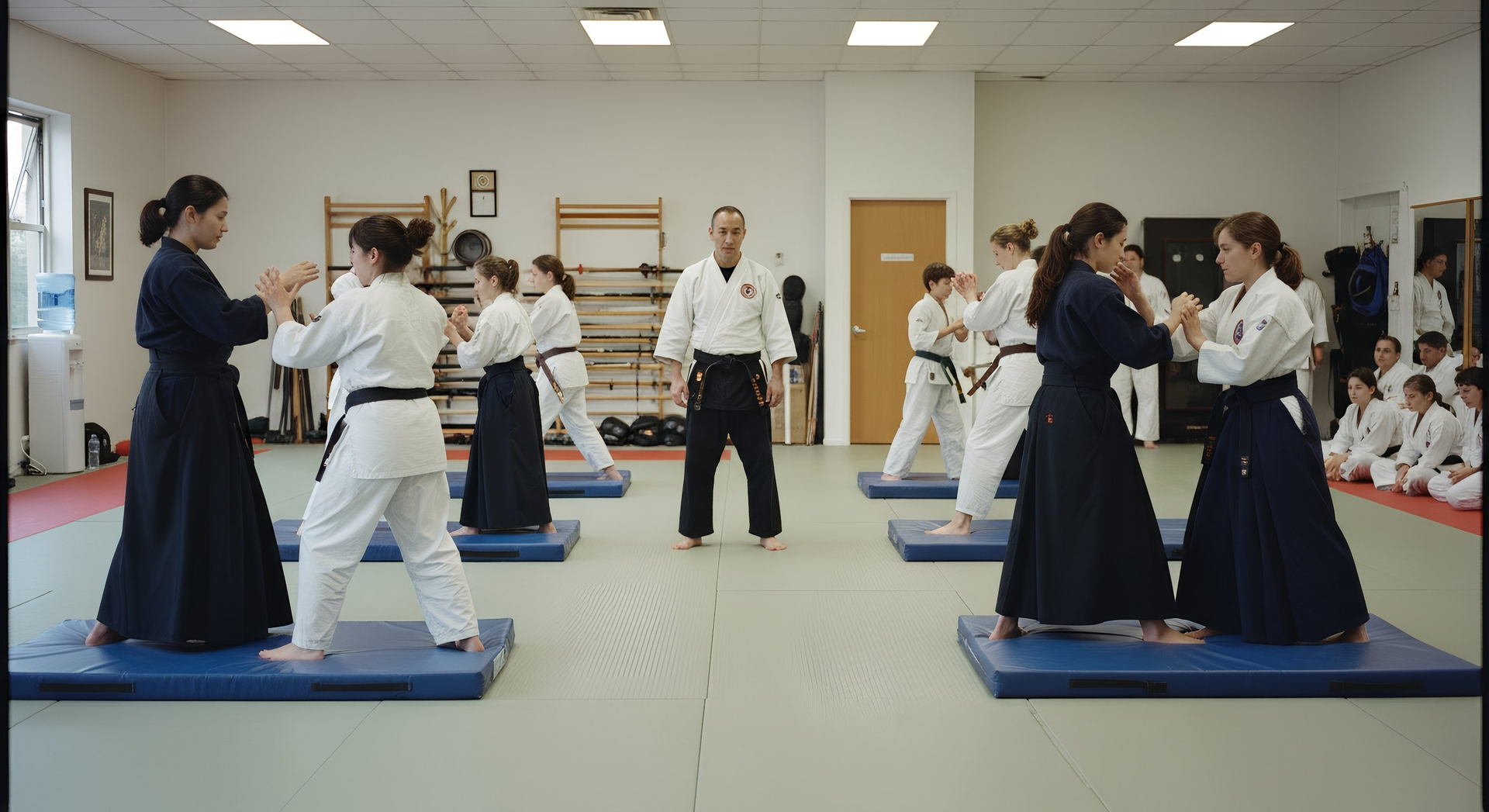
Insurers assess martial arts risk on a style-by-style basis precisely because the risk profiles are genuinely different. A Tai Chi class serving a senior demographic presents different injury frequency and severity characteristics than a Muay Thai sparring session. A BJJ rolling class presents different risk dynamics than a Karate kata class. A Kali weapons session presents different risk considerations than an Aikido cooperative training session.
When your school teaches three, four, or more distinct styles, each of those styles needs to be specifically declared in your policy. The insurer cannot accurately price or structure cover around activities they do not know about. And if an incident arises from an undeclared style, the question of whether the policy responds becomes genuinely uncertain at the worst possible time.
The Self-Defence Program Consideration
Many Australian martial arts schools run general self-defence programs — short courses or workshops that introduce basic protective techniques to participants who are not enrolled martial arts students. These programs typically draw from multiple styles and are often marketed to specific populations: women, corporate employees, community groups.
A self-defence program is a different product to ongoing martial arts instruction — it involves participants with no martial arts background, in a short-format environment, often at a venue other than your school, and with a specific outcome expectation that creates its own professional responsibility. If your school runs self-defence programs, these should be specifically declared and discussed with your broker, not assumed to be covered under your standard school policy.
The MMA and Fitness Blend
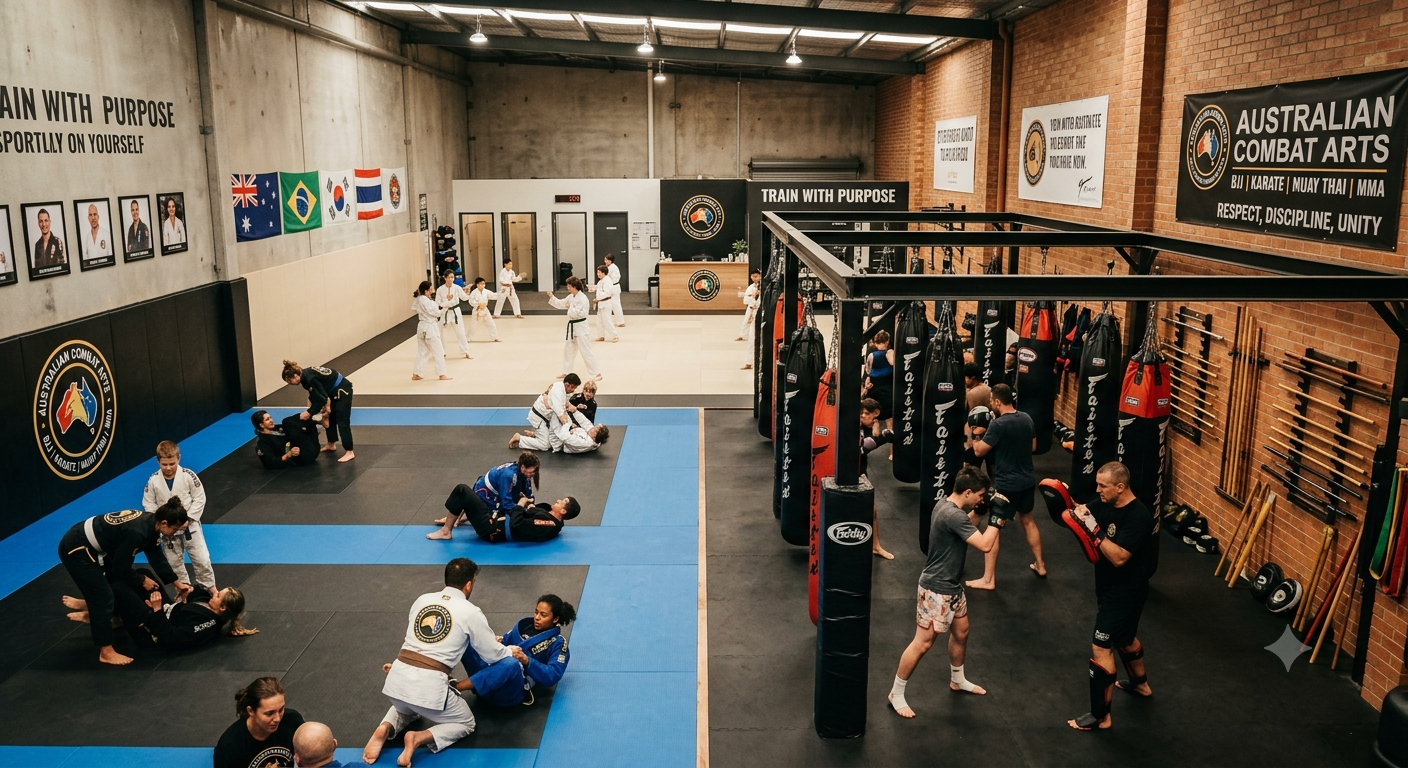
MMA training facilities represent one of the most common multi-style environments in Australian martial arts. A typical MMA gym teaches striking (boxing, Muay Thai, kickboxing), grappling (BJJ, wrestling, Judo), and conditioning — often alongside 24/7 gym access for members. Each of these elements has its own risk profile, and together they constitute an operation significantly more complex than any single style.
Over the years, many martial arts businesses have diversified by adding fitness equipment and activities that may not be covered in a standard policy. We call this 'blending' — when a martial arts academy introduces a gym section, an obstacle course, a cafe, or other complementary services. Each addition requires specific declaration to ensure the combined operation is accurately reflected in the policy.
Instructor Qualifications Across Multiple Styles
A multi-style school needs instructors qualified to teach each style. The qualification requirements that your insurance policy carries for covered instructors need to be met by the specific instructor delivering each specific style — not just by the principal instructor whose qualifications are strongest. An assistant instructor covering a style they are not qualified to teach creates a coverage question regardless of the principal's credentials.