Hapkido and Aikido: What Schools Teaching Joint Locks and Redirection Arts Need from Their Insurance
The Specific Coverage Considerations for Australia's Joint Control and Throwing Arts
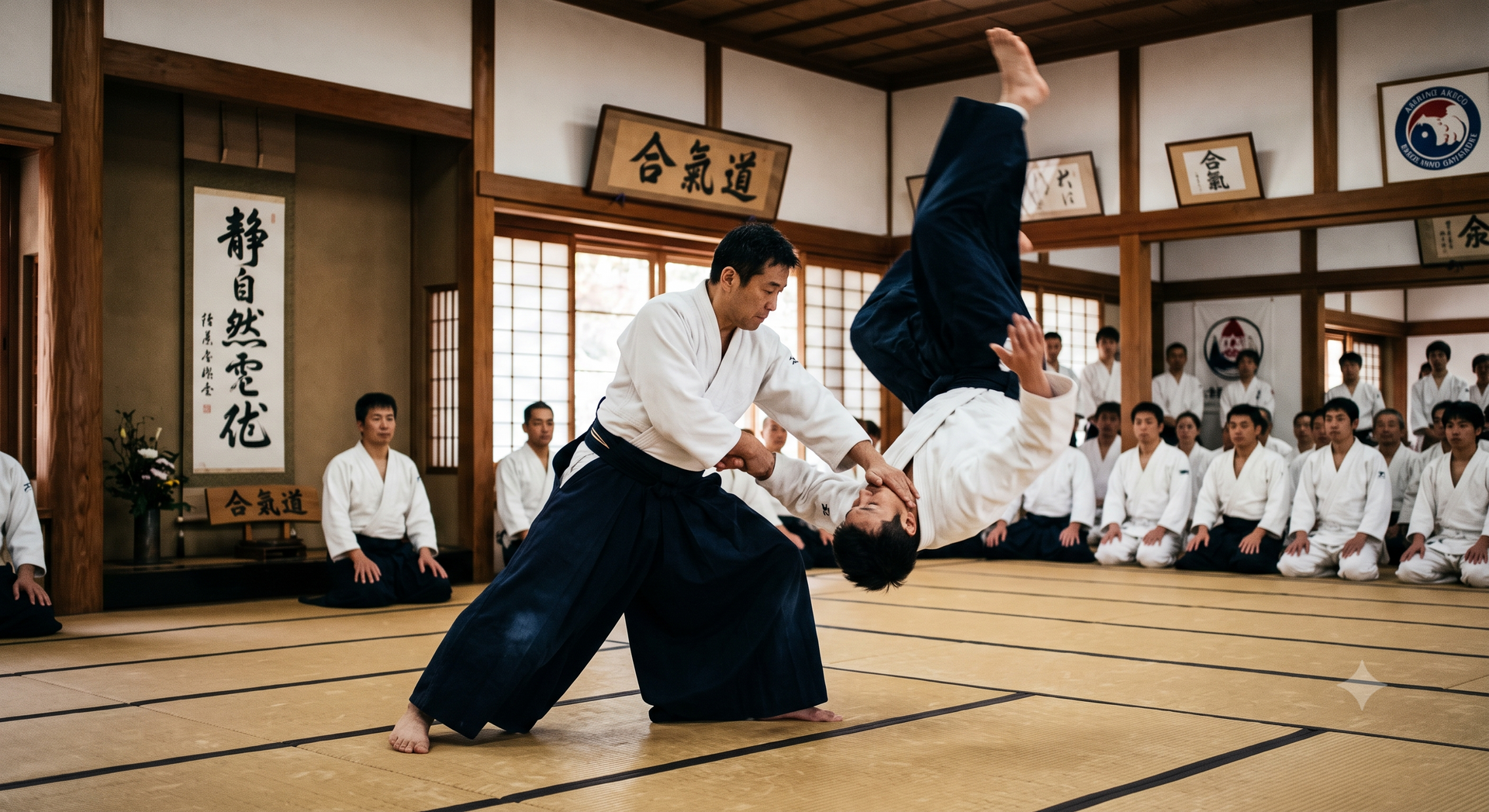
Of all the ideas that martial arts have contributed to human culture, perhaps none is more counterintuitive than this: you do not need to be stronger than your opponent. You need only to use their strength better than they do. This principle — the redirection of force rather than the meeting of it — is the philosophical and technical heart of Hapkido from Korea and Aikido from Japan.
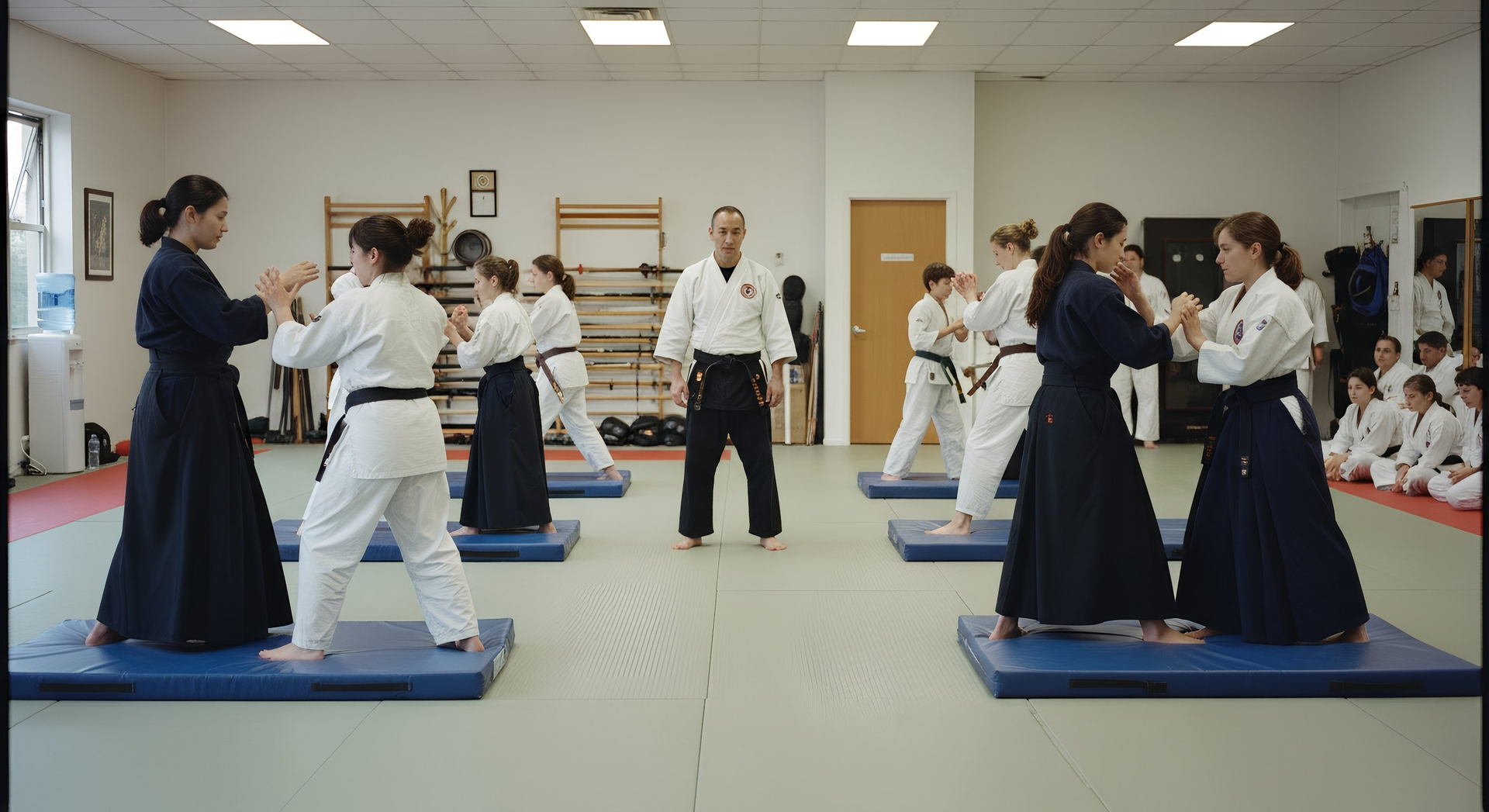
Both arts are built on joint control, throwing, and the precise manipulation of another person's balance and structure. Both are taught in Australian dojos to students of every age and background. And both carry specific insurance characteristics that a school owner operating in this space should understand.
Joint Lock Training and the Injury Profile
The joint lock and throwing repertoire of both Hapkido and Aikido is among the most extensive in the martial arts world. Techniques designed to control, redirect, or in serious contexts damage every major joint in the body — from wrists to shoulders, elbows to ankles — are part of the curriculum from relatively early in training.
The injury profile this creates is specific: joint injuries — sprains, tears, strain injuries — are the most common training injuries in these arts, produced when a technique is applied too forcefully or when a student's tap-out or verbal submission is not respected quickly enough. Schools that cultivate a culture where tapping is honoured immediately and unconditionally produce dramatically fewer of these injuries than those where pushing through discomfort is treated as admirable.
Your insurance declaration should accurately describe the joint lock techniques you teach and the contact level of your training. A school teaching only basic wrist releases has a different risk profile to one teaching comprehensive Hapkido locks including shoulder and elbow submissions at full pressure. Both are insurable — both need to be accurately described.
Throwing and Falling: The Ukemi Foundation
Throwing techniques in both arts — irimi-nage, tenchi-nage in Aikido; the extensive throwing catalogue of Hapkido — depend on the receiving student's ability to fall safely. Ukemi (falling technique) is not a secondary skill in these arts. It is a primary safety foundation that determines whether throws produce learning experiences or injuries.
A school that systematically teaches falling from the very first class, that monitors falling quality as carefully as technique execution, and that does not allow students to receive throwing techniques before their ukemi is adequate, operates with a fundamentally different risk profile to one that skips this foundation.
Aikido's Non-Competitive Structure and Its Insurance Context
Traditional Aikido does not include competitive sparring — a characteristic that distinguishes it from most other martial arts and that has genuine implications for its insurance position. The absence of competition means that many of the event-specific coverage questions — tournament cover, fight show insurance, competitive event arrangements — do not apply to the standard Aikido curriculum.
What does apply is the quality of the cooperative training environment. In a cooperative, non-competitive setting, the safety of the training depends on both partners' mutual agreement to appropriate intensity and pace. Instructors in this environment have specific responsibilities around managing that cooperative quality — ensuring that more experienced students do not overwhelm beginners, that pace is appropriate for everyone on the mat, and that the absence of competition does not lead to sloppy technical standards.
Hapkido's Law Enforcement Use and Corporate Training
Hapkido's strong reputation in law enforcement and security training circles means that some Australian Hapkido instructors run programs for professional security, law enforcement, or corporate defensive tactics clients. If your school delivers programs in this context, the insurance considerations — particularly around off-site delivery, corporate premises, and the professional client population — require specific discussion rather than assumption that a standard school policy covers this activity.