Teaching Adults Over 40: What Martial Arts School Owners Need to Consider for Insurance
The Risk Profile of Older Adult Martial Arts Training and How It Affects Your Cover
The conversation happens in dojos across Australia on a regular basis. An adult in their forties, fifties, or beyond enquires about starting training, and somewhere in the message — almost always — there is a version of the same question: 'Am I too old to start this?' The answer, delivered without qualification, is no. Adult beginners often bring qualities that younger students lack: genuine intrinsic motivation, the capacity for deliberate practice, and life experience that produces psychological toughness.
For school owners welcoming this growing demographic, the answer to the physical and psychological questions is clear. The insurance question is less often discussed — and worth understanding before an incident involving an older student makes it urgent.
The Physical Reality and Its Insurance Significance
The over-forty body is different. Recovery takes longer. Connective tissue is less elastic. The consequences of a fall, a joint lock applied with too much force, or a collision during sparring are statistically more significant for a fifty-year-old than for a twenty-year-old. Not more likely to happen — more consequential when they do.
This is not a reason to turn away older students. It is a reason to run your adult programs with appropriate care — and to make sure your insurance accurately reflects the demographic you serve. A school that teaches predominantly younger adults has a different risk profile to one whose classes are predominantly adults over forty. Both are insurable; both need to be accurately described.
Supervision Standards and Partner Selection
For older adult students — particularly beginners — the supervision responsibility around partner selection is specifically important. A fifty-five-year-old with limited previous training experience paired with a twenty-year-old black belt in contact sparring is a risk management problem, not just a training quality problem. The quality of your paring decisions in these situations is part of what an insurer assesses when evaluating your school's risk profile.
Good practice — maintaining appropriate paring, communicating openly with older students about intensity expectations, building progression conservatively — is simultaneously good instruction and good risk management. The documentation of these practices is what would be examined if a claim arose from an older student injury.
Pre-Existing Conditions and Health Disclosure
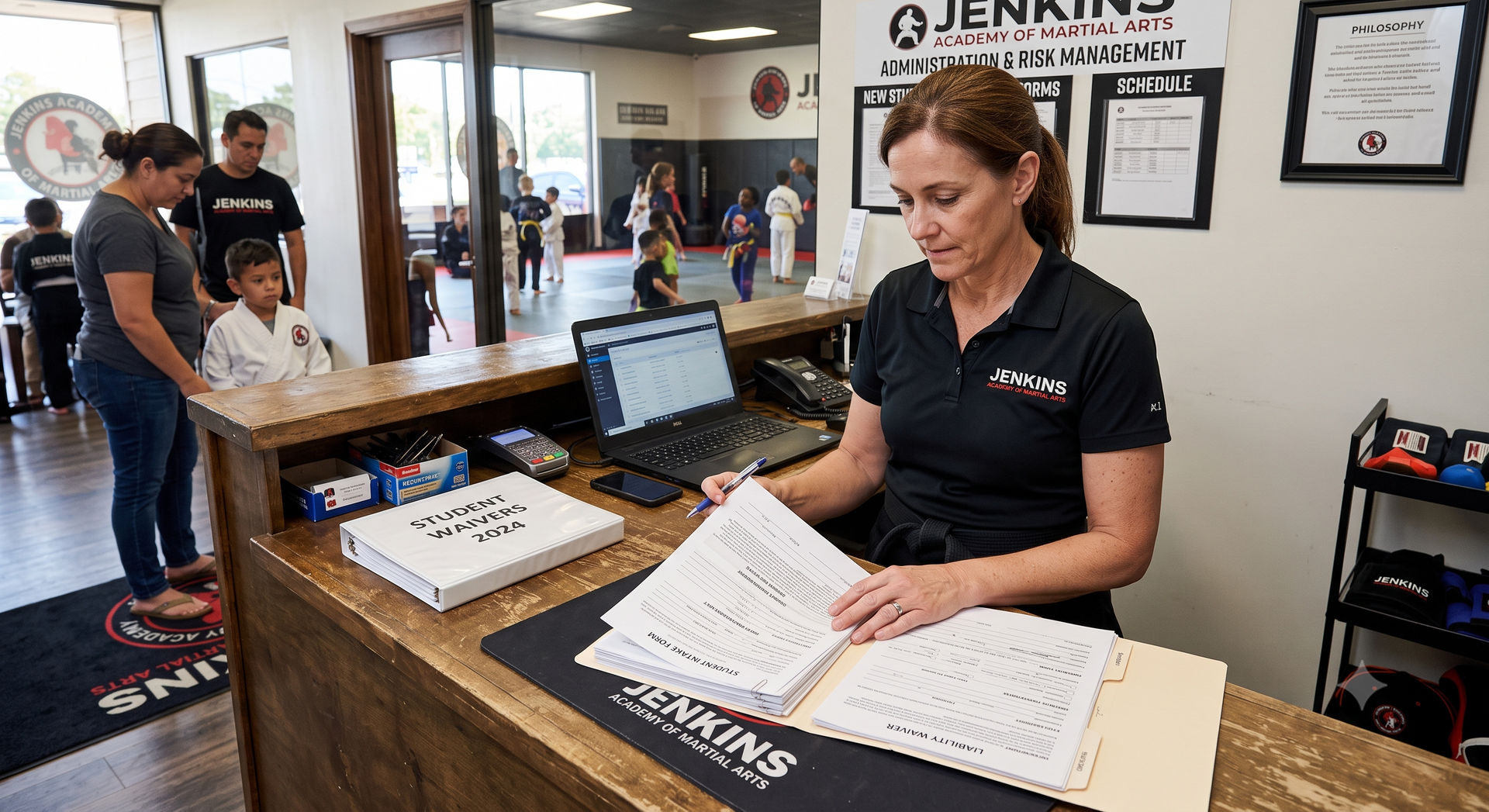
Older adult populations have higher rates of pre-existing health conditions than younger populations. Joint replacements, spinal issues, cardiovascular conditions, and medications that affect balance or coordination are all more common in adults over forty. Your student intake process — the health questionnaire that new students complete — is more consequential for this demographic than for younger, generally healthier students.
A robust intake process that asks specifically about relevant health conditions, previous injuries, and current medications gives you the information you need to make appropriate modifications. A student who withholds a relevant health condition and is subsequently injured presents a different liability picture than one whose condition was disclosed and accommodated. The documentation of your intake process is evidence of your duty of care.
Training Modifications and the Professional Indemnity Connection
When you specifically modify a student's training program in response to their age, fitness level, or health disclosures, you are making a professional judgment about appropriate exercise prescription. This is a Professional Indemnity dimension of your work. If the modification is later challenged as inadequate or inappropriate — if a student argues that the program you designed for them was still too demanding for their circumstances — PI cover is what responds.
Accurate documentation of the modifications you make, the reasoning behind them, and the student's response over time is the record that supports your professional judgment if it is ever challenged.