Tai Chi and the Internal Arts: The Insurance Questions Schools Often Overlook
Why Tai Chi, Xingyi and Bagua Schools Serving Older Populations Have Specific Coverage Considerations
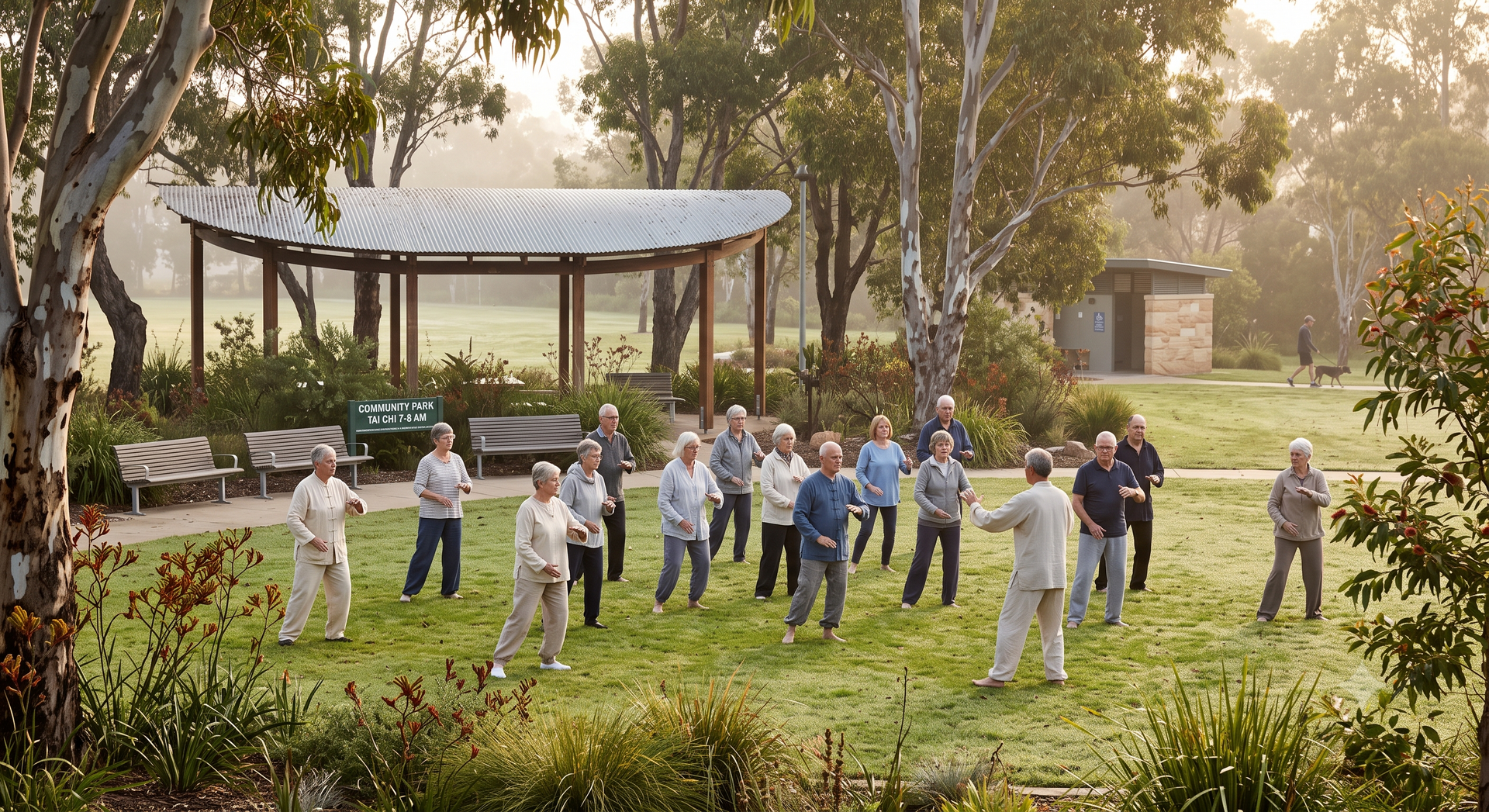
Tai Chi Chuan is simultaneously the most famous and the most misunderstood internal art. An estimated 300 million people practise some form of Tai Chi globally, making it arguably the world's most widely practised martial art by participation numbers. In Australia, the art serves a primarily adult and older-adult demographic — and this demographic specificity creates insurance considerations that are distinct from those of a school teaching high-contact striking arts to fit young adults.
The internal martial arts — Tai Chi, Xingyiquan, and Baguazhang — develop power through structural alignment, breath work, relaxation, and whole-body mechanics rather than muscular strength and physical conditioning. They are not without physical demand or injury risk, but the nature of that risk differs significantly from contact-heavy styles. Getting the insurance picture right for these schools means understanding how those differences translate to policy structure.
The Older Adult Demographic and Its Insurance Significance
The Australian government's health guidelines include Tai Chi as a recommended activity for older Australians specifically because of its evidence base for fall prevention and balance improvement. This means that a significant proportion of Tai Chi students across Australia are people for whom the government has specifically identified fall risk as a relevant health concern.
This demographic creates a specific duty of care consideration for school operators. An older adult who falls during a Tai Chi session has a higher likelihood of serious injury than a younger adult who falls during the same session. The claims that arise from falls in older adult populations are typically more significant in terms of injury severity and medical cost than comparable incidents in younger populations.
This does not mean Tai Chi schools have worse insurance positions — a well-run program that genuinely serves its older demographic safely has an excellent risk profile. It means the demographic should be accurately described in the policy, so the insurer can properly assess the specific profile rather than applying assumptions calibrated to a general martial arts school.
The Medical Referral Dimension
Many Tai Chi students in Australia arrive following explicit advice from a GP, physiotherapist, or other health practitioner. When students come to a school on medical referral — specifically because of a health condition the Tai Chi is intended to address — the school's role takes on an additional layer of professional responsibility.
Confirming with your insurer that your policy covers instruction delivered to students who are attending on medical referral for health management purposes is worthwhile. A standard martial arts school policy may or may not specifically address this context.
Xingyiquan: The Internal Art That Looks External
Xingyiquan's more explosive power expression and direct technical delivery surprises people who expect all internal arts to look like slow, flowing movement. For insurance purposes, Xingyiquan's training activities — particularly the more vigorous conditioning work and the power-generation drills — need to be declared accurately rather than described only as 'internal arts training' alongside gentler Tai Chi sessions.
Baguazhang: Circle Walking and Outdoor Training
Baguazhang's signature circle walk — a continuous circular walking practice maintained over extended periods — is a distinctive training activity that many schools conduct both indoors and outdoors. If your school includes outdoor circle walking, park sessions, or nature-based training environments, confirm that your policy's venue coverage extends to these locations.
Weapons Content in Internal Arts
Many Tai Chi and internal arts curricula include weapons practice — the jian (straight sword), dao (broadsword), and various traditional implements. If your school includes weapons practice, this needs to be declared specifically regardless of the gentle nature of most of your curriculum. Weapons training is a distinct activity category from empty-hand practice.