Starting Martial Arts After 40: What to Expect, What to Modify, and Why It's Worth Every Bit of It
A Practical, Honest Guide for Adult Beginners Who Think They May Have Started Too Late
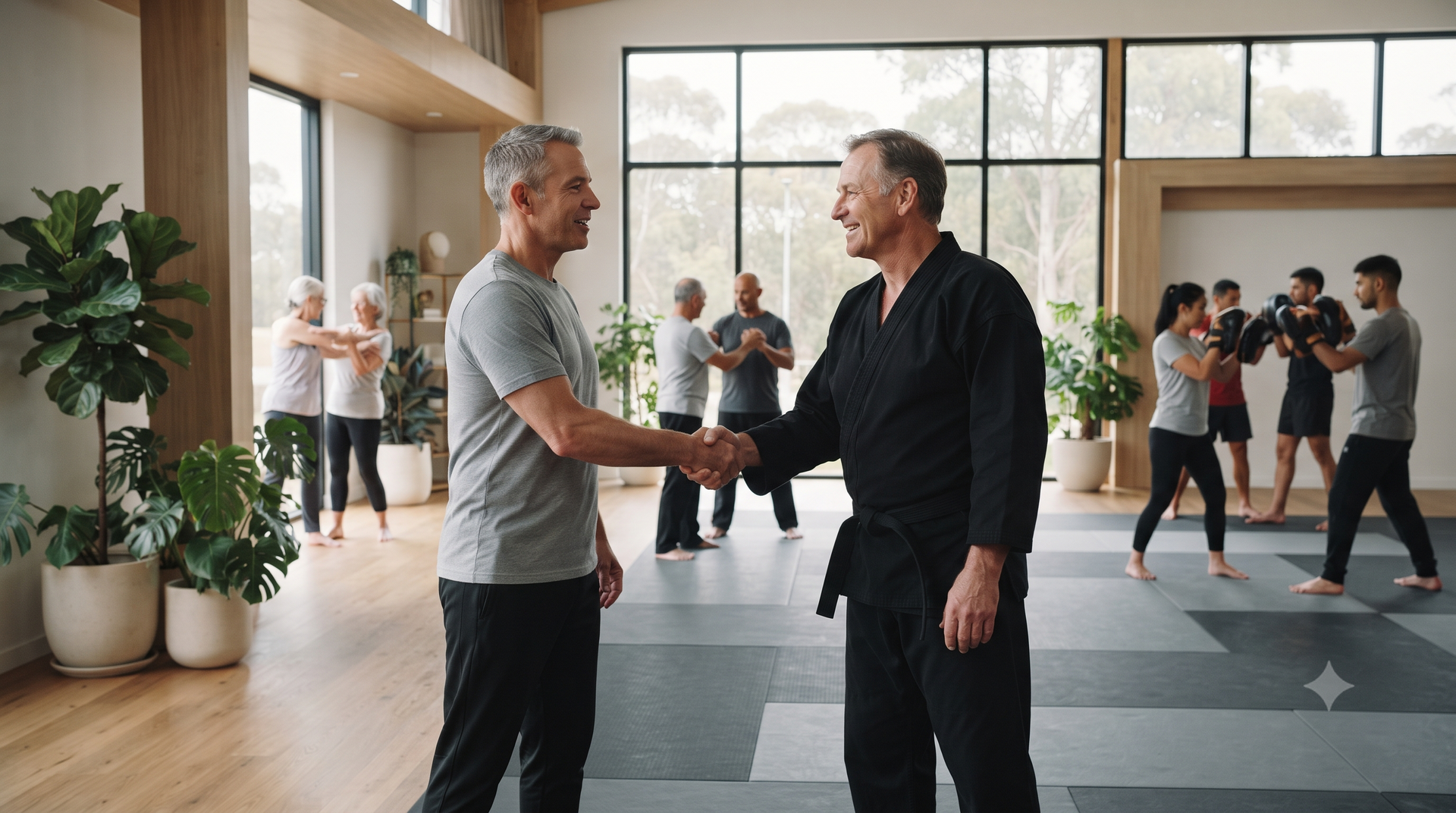
The conversation happens in dojos across Australia on a regular basis. An adult in their forties, fifties, or beyond approaches the front desk or sends an enquiry email, and somewhere in the message — almost always — there is a version of the same question: 'Am I too old to start this?'
The answer, delivered without qualification, is no. But the more useful answer is longer than that, because what lies ahead for an adult beginner is genuinely different from what lies ahead for a fifteen-year-old starting the same art. Different in some ways that require adjustment, and different in several ways that are actually advantages. This article is an attempt to give that adult beginner an honest picture — what to expect, what to modify, what to prepare for mentally, and why the investment is worth making.
The Physical Reality: Working With Your Body, Not Against It
The most important thing an adult beginner can do before their first class is to completely abandon any comparison to their twenty-year-old self or to the younger students in the class. That comparison is not just unhelpful — it actively interferes with the learning process and dramatically increases injury risk.
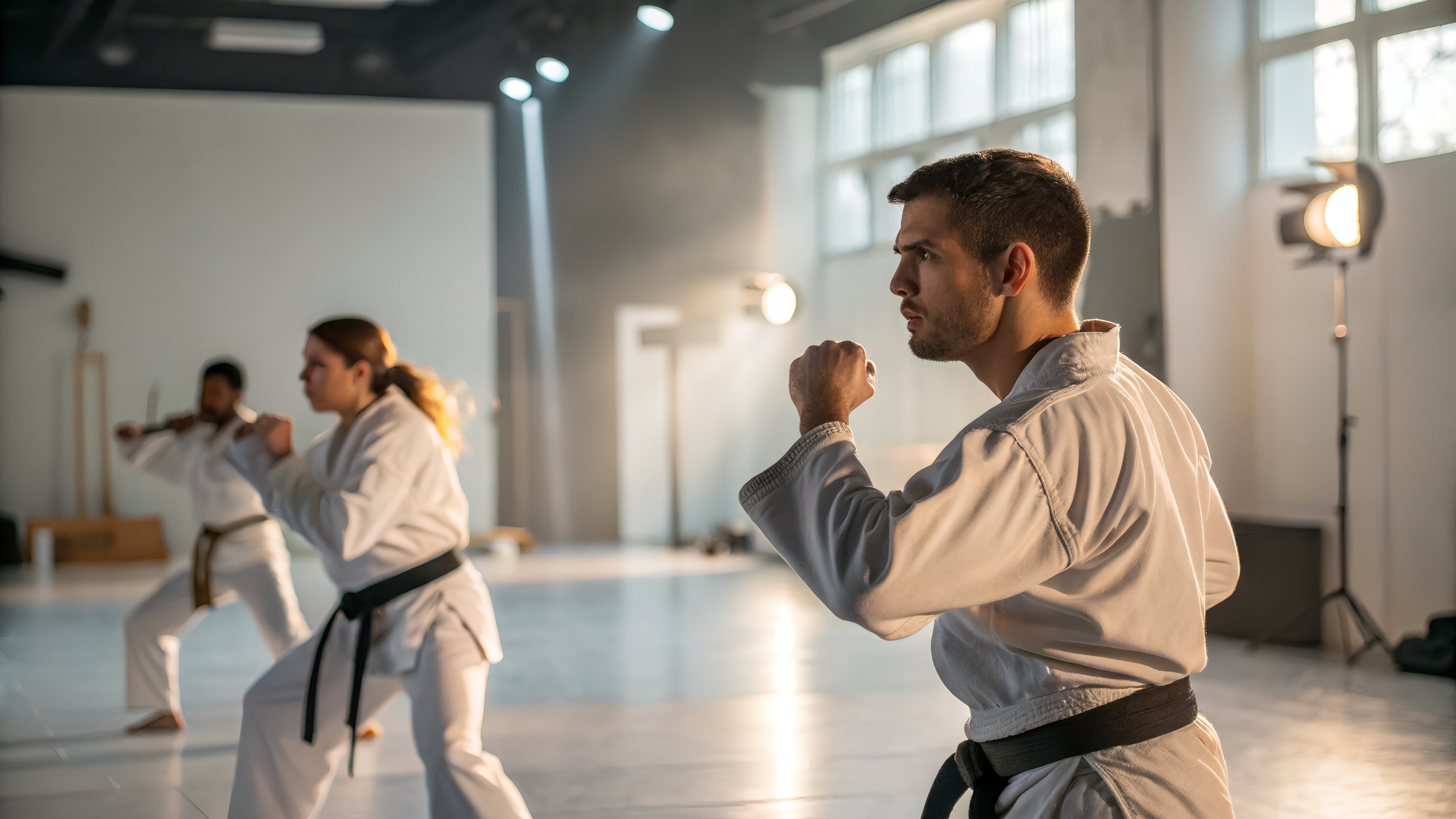
The over-forty body is different. Recovery takes longer — what a twenty-year-old shakes off in a day might leave a forty-year-old sore for three days. Connective tissue — tendons, ligaments, cartilage — is less elastic and more vulnerable to overload injuries than it was twenty years earlier. Joint range of motion may be reduced, which affects the execution of certain techniques, particularly high kicks in arts like Taekwondo.
None of these facts are reasons not to train. They are reasons to train intelligently. Intelligent training for adult beginners means committing to a proper warm-up that is longer than the class warm-up provides — ten to fifteen minutes of dedicated mobility and joint preparation before class begins. It means communicating honestly with your instructor about your body's current limitations. It means resisting the ego-driven temptation to push through pain signals rather than investigating them. And it means building recovery practices — adequate sleep, nutrition, and deliberate rest — that keep the training sustainable over years, not just weeks.
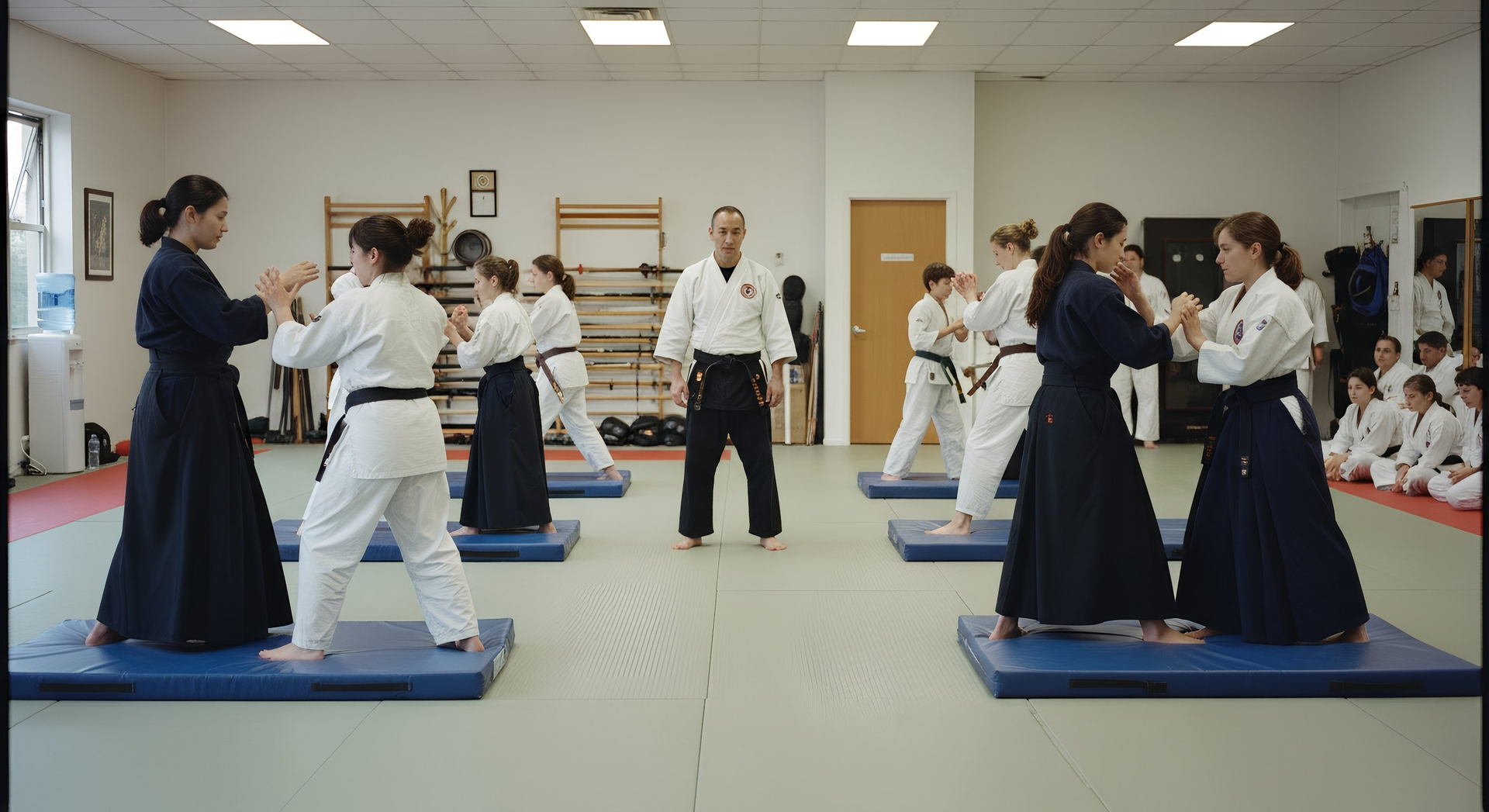
The arts that tend to be most accessible for adult beginners without prior athletic background include Tai Chi, Aikido, Judo (with patient partners), and BJJ (with communication-first training culture). High-impact striking arts like Muay Thai and Taekwondo are absolutely trainable as an adult beginner, but benefit from additional conditioning work in the early months and more conservative sparring progression.
The Mental Advantages: What Youth Cannot Buy
Here is something that experienced instructors will confirm: adult beginners frequently outperform teenage beginners in the quality of their long-term development, even if the teenager initially learns techniques faster. The reasons are instructive.
Adults have developed the capacity for deliberate practice. They understand that improvement comes from focused, intentional repetition with specific goals in mind — not just showing up and going through the motions. A forty-year-old who has been professionally successful knows how to learn, how to receive feedback without ego collapse, and how to build skill systematically. That meta-skill is immensely valuable in a dojo.
Adults also tend to have cleaner motivation. They are not there because a parent signed them up, or because they want to impress someone, or because they feel social pressure. They are there because they decided to be, and that decision came from a genuine desire to develop something. Intrinsic motivation produces more consistent effort and greater resilience through the inevitable frustrating periods of any skill acquisition process.
And adults have a quality that is irreplaceable in martial arts: they have been through genuinely difficult life experiences. They know what it feels like to persist through discomfort, to fail and try again, to be humbled and recover. Those experiences create a psychological toughness that a seventeen-year-old, however talented physically, simply does not yet possess. On the mat, that toughness shows.
The Social Dimension: Finding Your Place
One of the underappreciated benefits of starting martial arts as an adult is the social environment it creates. Many adult beginners report that the dojo becomes one of their primary social communities — and this is not an accident.
Adult life in modern Australia is increasingly social-isolation-prone. Work hours are long, commutes are substantial, social life contracts around an increasingly narrow set of responsibilities, and making genuinely new friends beyond existing social networks becomes progressively harder after thirty. The dojo disrupts all of this. It puts you in regular physical proximity with a diverse group of people — different ages, professions, backgrounds — who share a common interest and a common experience of vulnerability and growth.
Training together, particularly training that involves physical contact and mutual cooperation, creates trust and familiarity at a pace that normal social interaction rarely matches. By the end of your second month on the mat, you will likely know your training partners more genuinely than colleagues you have worked alongside for years. That social richness is a significant quality-of-life benefit that most adult beginners do not anticipate and deeply appreciate once they experience it.
Choosing the Right School: What Matters for Adults
Not all martial arts schools are equally well-suited for adult beginners, and taking time to find the right environment is worth the effort. When evaluating schools, adult beginners should look for several specific qualities.
First, instructor attitude toward adult learners. Some schools are primarily designed around junior development programs, with adult classes as an afterthought. A school where the instructor has experience teaching adults and understands how adult learning differs from child development is a significantly better environment. Second, training culture. Ego-driven, hyper-competitive training cultures are risky for adult beginners — not because adults cannot handle pressure, but because the injury risk from overly aggressive partners is real and often invisible until the damage is done. Look for a culture that prizes mutual respect, communication, and sustainable progress. Third, clarity about your goals. The best school for fitness differs from the best school for self-defence, which differs again from the best school for competition. Be honest with yourself about what you are seeking, and choose accordingly.
Martial Arts Australia's club directory filters by location, style, and club features — making it a useful starting point for adult beginners trying to find the right environment without spending weeks visiting unsuitable schools.
The Long View
There is a piece of wisdom that circulates quietly through the martial arts community: the best time to start training was twenty years ago. The second-best time is now.
An adult who begins training at forty and maintains consistent practice has the genuine prospect of holding a black belt — or its equivalent in their chosen art — in their late forties. That same adult, training consistently through their fifties and sixties, can develop a depth and subtlety of understanding that younger practitioners simply have not had the time to accumulate.
The physical peak of martial arts ability comes and goes. The wisdom, patience, and character that the arts develop over decades do not. The oldest, wisest practitioners in every style are not feared or respected because of how fast they are. They are respected because of what they understand — and that understanding is available to anyone willing to begin.