What Is Kung Fu?
Understanding Traditional Chinese Martial Arts
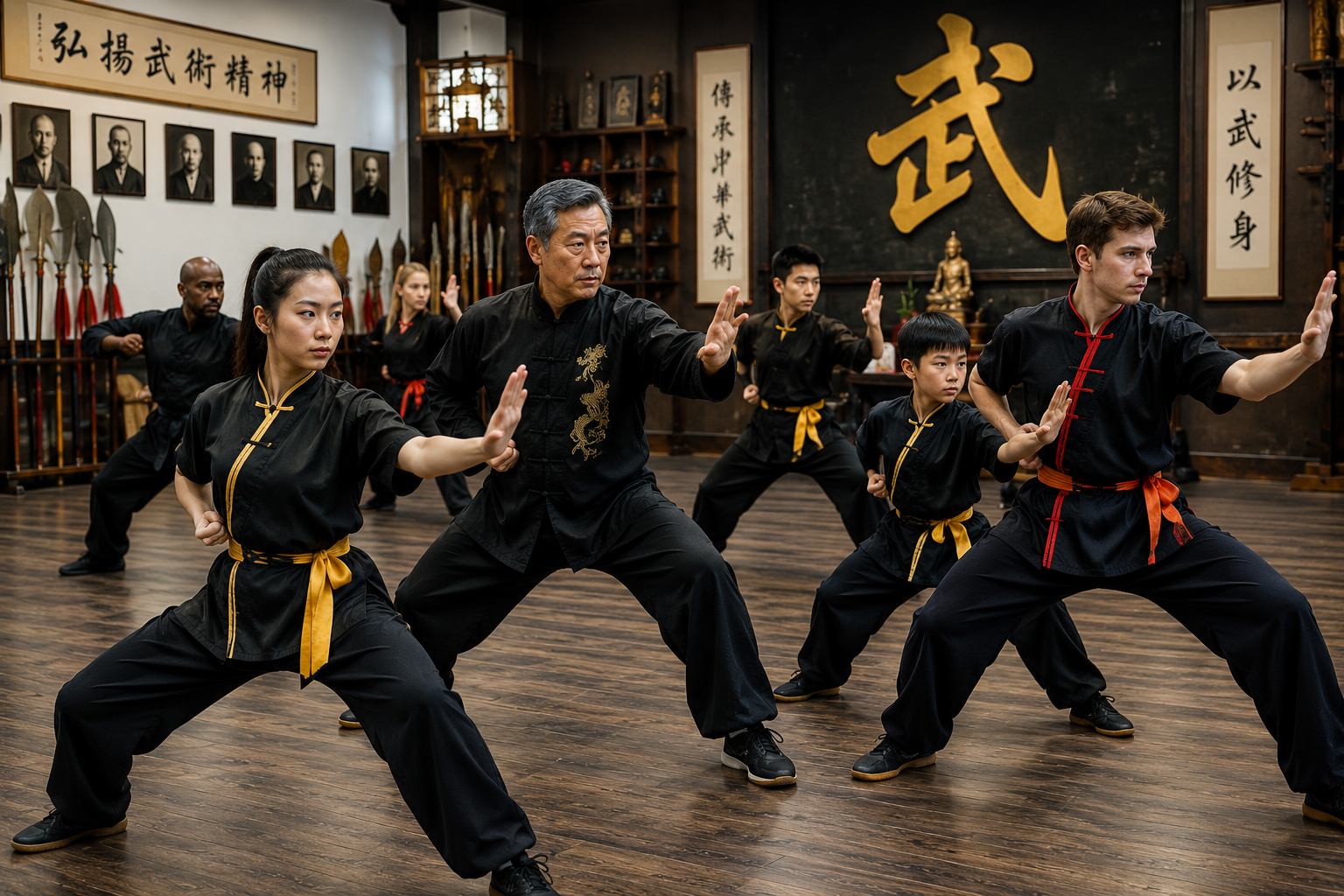
If you were to ask a random person on a street in Brisbane or Melbourne what "Kung Fu" is, they would likely mimic a movie scene—a lightning-fast strike, a deep stance, or perhaps a reference to Bruce Lee or the Shaolin Monks. While pop culture has made Chinese martial arts famous globally, the reality inside a traditional Chinese kwoon (training hall) is often far more profound, subtle, and varied than the silver screen suggests.
Kung Fu is not just a single style of fighting. It is a vast ecosystem of thousands of different systems, each with its own history, technical specialisations, and philosophical underpinnings. To understand Kung Fu is to look at the history of China itself—a tapestry of geography, religion, and the enduring human pursuit of self-improvement.
The True Meaning of the Term
Perhaps the most surprising thing for beginners is that the term "Kung Fu" (or Gong Fu) does not actually mean "fighting." In its original Cantonese and Mandarin contexts, it refers to "any skill acquired through hard work, patience, and time."
A master calligrapher, a skilled chef, or a dedicated musician can all be said to have "great Kung Fu." When applied to martial arts, the term implies that the practitioner is not just learning how to kick or punch, but is undergoing a long-term process of forging their character through disciplined effort.
The formal term for Chinese martial arts is Wushu. In modern times, Wushu often refers to the highly athletic, performance-oriented sport seen in international competitions. However, whether we call it Wushu, Kung Fu, or Kuoshu, we are talking about a tradition that stretches back thousands of years.
The Two Great Pillars: Shaolin and Wudang
While there are countless regional styles, most Chinese martial arts are traditionally categorized into two major philosophical streams: External and Internal.
1. The Shaolin Tradition (External/Waijia)
The Shaolin Temple in Henan Province is the legendary birthplace of "External" Kung Fu. Founded on the principles of Chan Buddhism, Shaolin styles are often characterized by their explosive power, athleticism, and physical conditioning.
These styles focus on the development of "Li" (muscular strength) and "Jing" (refined power). Training involves rigorous stance work, striking drills, and the conditioning of the limbs. For a Shaolin practitioner, the physical hardship of training is a form of ascetic discipline—a way to "cleanse" the ego and build a resilient spirit.
2. The Wudang Tradition (Internal/Neijia)
High in the Wudang Mountains, a different approach developed, heavily influenced by Taoist philosophy. "Internal" styles—such as Tai Chi (Taijiquan), Baguazhang, and Xingyiquan—prioritise the cultivation of "Qi" (internal energy) and "Yi" (intention).
Instead of meeting force with force, Internal practitioners focus on relaxation, circular movement, and redirection. The goal is to remain "soft" on the outside while maintaining a "hard" core of focused energy on the inside. In these systems, the body moves like a single unit, driven by the breath and a quiet, focused mind.
Geography and Style: Southern Fists, Northern Kicks
A common saying in the martial arts community is "Nan Quan, Bei Tui"—Southern Fists, Northern Kicks. This highlights how the physical environment of China influenced the evolution of its fighting styles.
- Northern Styles (Changquan/Long Fist): The vast, open plains of Northern China allowed for expansive movements. Northern styles are known for their long-range strikes, acrobatic leaps, and sophisticated kicking techniques. These styles require great flexibility and "opening" of the body.
- Southern Styles (Nanquan): In the crowded cities and river-based regions of the South, space was a luxury. Southern styles, such as Wing Chun and Hung Ga, evolved for close-quarters combat. Stances are often lower and more stable, with a heavy emphasis on intricate hand techniques, short-range power, and "bridging" (connecting with the opponent's arms).
The Pillars of Traditional Training
Regardless of the style, a traditional Kung Fu curriculum is usually built on several fundamental components.
1. Jibengong (The Basics)
No matter how advanced a student becomes, they never truly leave the basics behind. This includes flexibility training, leg conditioning, and, most famously, stance work (Ma Bu or Horse Stance). Holding a low, stable stance for extended periods is a hallmark of Kung Fu, designed to build "rooting"—the ability to remain balanced and powerful regardless of the opponent's pressure.
2. Taolu (Forms)
Forms are choreographed sequences of movements that act as a "living library" for the style. A form isn't just a performance; it is a textbook of techniques, transitions, and strategies. By practicing forms, the student "downloads" the technical DNA of their lineage, learning how to move their body with the specific rhythm and intent of that style.
3. Weapons Training
Traditional Kung Fu includes a massive array of weapons. The "Four Major Weapons" are:
- The Staff (Gun): Known as the "Father of all weapons."
- The Spear (Qiang): The "King of all weapons."
- The Broadsword (Dao): Known for its aggressive, hacking power.
- The Straight Sword (Jian): A refined, elegant weapon requiring great precision.
Weapon training is seen as an extension of the body. It teaches the student how to project their energy beyond their fingertips and requires a high level of coordination and focus.
Wu De: The Martial Virtue
In the Chinese tradition, a person who is a great fighter but lacks character is not considered a true martial artist. This is where the concept of Wu De (Martial Virtue) comes in.
Wu De is divided into virtues of "Mind" and virtues of "Deed."
- Virtues of Deed: Humility, Respect, Righteousness, Trust, and Loyalty.
- Virtues of Mind: Will, Endurance, Perseverance, Patience, and Courage.
When you walk into a traditional kwoon, the etiquette is designed to foster these virtues. The bow, the respect shown to the teacher (Sifu), and the patience required to master a single move are all part of a larger project: building a person who is capable of great violence but chooses peace and integrity.
Kung Fu in the Modern Australian Context
Australia has a rich and vibrant Kung Fu history, dating back to the Gold Rush era and growing significantly with the waves of migration in the 20th century. Today, you can find traditional schools in almost every major city, from the bustling Chinatowns to the quiet suburbs.
1. Holistic Health
Unlike many modern fitness regimes that focus purely on aesthetics, Kung Fu offers a holistic approach. It combines cardiovascular health with flexibility, coordination, and—crucially—breath work. Many Australians find that Kung Fu helps them stay mobile and energetic as they age, in a way that high-impact sports might not.
2. Mental Resilience
We live in an age of constant distraction and "burnout." The deep focus required to learn a complex Kung Fu form provides a mental "reset." It is an opportunity to be entirely present in the body, which has significant benefits for stress management and mental clarity.
3. A Diverse Community
Australian kwoons are melting pots. You might find a 70-year-old grandmother practicing Tai Chi alongside a 20-year-old athlete training for a Sanda (sparring) competition. It is a community that values progress over ego and respects the time it takes to build real skill.
Start Your Kung Fu Journey
Are you ready to explore the world of traditional Chinese martial arts? Martial Arts Australia is committed to connecting students with legitimate, high-quality schools across Australia. Use our directory to find a club and an instructor who can guide you on this ancient and transformative path.